




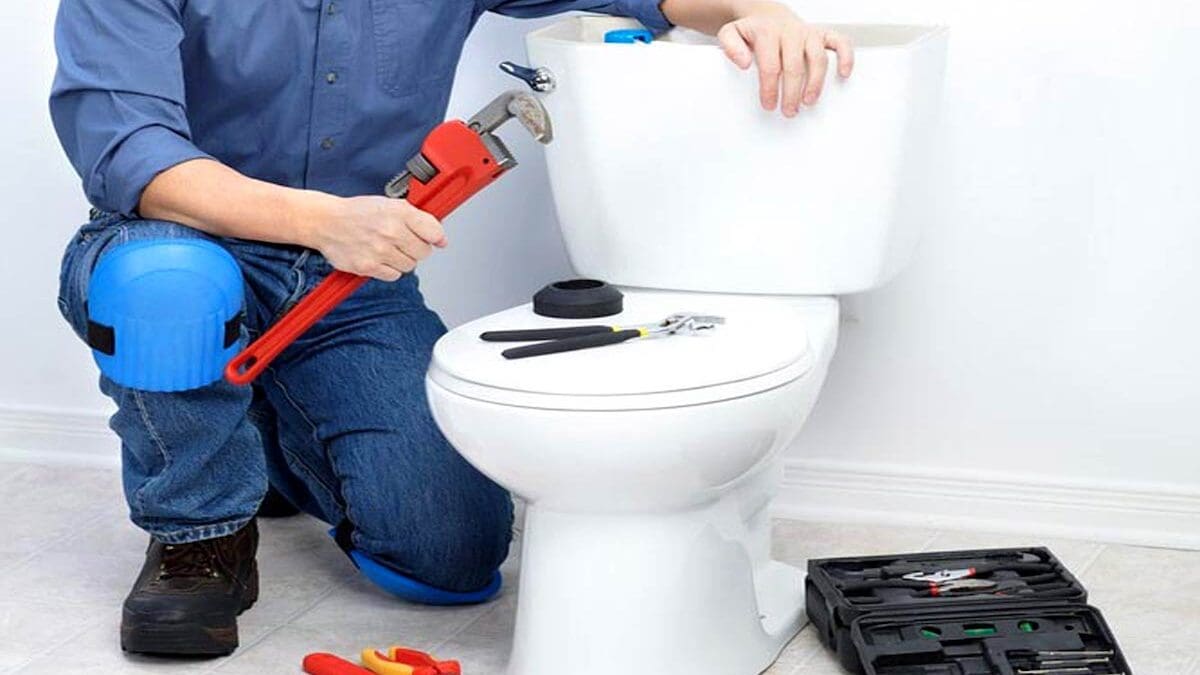
Quick answer: Repair your toilet if it’s under 10 years old and the problem is a single-part failure (flapper, fill valve, or wax ring). Replace it if it’s pre-1994, cracked, needs repeated repairs, or you want to cut water use. Most repairs cost far less than replacement, but an old toilet can quietly cost you more in wasted water than a new one costs to install.
Below is the detail behind that answer, plus the data that backs it up.
How Much Water an Old Toilet Actually Wastes
This is the number most homeowners never check, and it’s the one that changes the math on repair vs. replace.
| Toilet installed | Water per flush |
| Before 1980 | 5–7 gallons |
| 1980–1994 | 3.5 gallons |
| After 1994 (federal standard) | 1.6 gallons |
| WaterSense-labeled models | 1.28 gallons or less |
Source: U.S. EPA WaterSense program.
Booster pumps are specifically made to enhance the water pressure in your home’s plumbing system.
If your toilet was installed before 1994, it uses more than double the water of a current model, on every single flush. The EPA also estimates that replacing old, inefficient toilets with WaterSense models saves the average family 20–60% on toilet-related water use — close to 13,000 gallons a year — worth roughly $170 annually and about $3,400 over the life of the toilet.
There’s a second number worth knowing: a running or leaking toilet can waste up to 180 gallons of water per week on its own. That’s a leaking toilet costing more in wasted water, over a year, than most repair calls cost to fix it.
Practical takeaway: if your toilet predates 1994, don’t just repair it when it breaks — price out replacement. If it’s newer than that and has one specific fault, repair almost always makes more financial sense.
The 6 Toilet Problems We’re Called for Most
Each of these has a different repair path and a different price range. Knowing which one you have tells you what to expect before a plumber even arrives.
1. Clogs
The most common call. A single clog is usually a quick fix. Recurring clogs in the same toilet usually mean a partial blockage further down the line, not a problem with the toilet itself—that points to a drain cleaning issue, not a toilet issue.
2. Running toilets
Almost always a worn flapper or a fill valve that isn’t seating properly. Cheap to fix, expensive to ignore—see the 180-gallon-a-week figure above.
3. Leaks at the base or tank
Usually a failed wax ring (base) or a loose tank bolt/gasket (tank). Left alone, a base leak can damage the subfloor. If the leak seems to be coming from a supply line rather than the toilet itself, that’s closer to a busted pipe or supply line repair.
4. Weak or incomplete flushing
Common in toilets from the low-flow transition era (mid-1980s to early 1990s), which sometimes traded water savings for flush power before the technology caught up. Often solved with a flush mechanism upgrade rather than a full replacement.
5. Wobbling or rocking
Usually a sign the wax ring seal has failed or the flange underneath is damaged. This one shouldn’t wait—a wobbling toilet is actively breaking its seal to the drain line with every use.
6. Cracks in the tank or bowl
No repair fixes a crack. This is a replacement, full stop—a cracked tank will eventually leak, and a cracked bowl is a safety issue.
Repair or Replace: A Straight Decision Framework
| Situation | Recommendation |
| The toilet is under 10 years old and has a single issue (flapper, fill valve, handle). | Repair |
| The toilet was installed before 1994. | Replace—water savings alone often pay for it within a few years. |
| You’ve called for repairs 2+ times in the past year. | Replace—you’re paying for the same problem repeatedly. |
| Visible crack in tank or bowl | Replace |
| Wobbling or leaking at the base | Repair the seal unless the flange itself is damaged, then replace it. |
| You want a water-efficient or dual-flush model. | Replace |
What a New Installation Involves
A proper toilet installation isn’t just “set it and bolt it down.” It includes:
- Checking the flange height and condition—a damaged or improperly set flange is the #1 cause of new-toilet leaks and wobble
- Installing a correctly sized wax ring or wax-free seal
- Leveling the bowl before securing it, so weight doesn’t sit unevenly on the seal
- Testing the fill and flush mechanism under real water pressure, not just a single test flush
- Checking the shutoff valve—an old, seized valve is a common point of failure that has nothing to do with the toilet itself
Skipping any of these is how a “quick toilet swap” turns into a leak six months later.
When It’s an Emergency
Most toilet problems can wait a day for a scheduled appointment. Two situations can’t:
- The toilet won’t stop running and is overflowing or close to it—shut off the valve at the base of the toilet immediately
- Water is leaking through the floor or ceiling below—this is active water damage in progress
If either applies, this falls under emergency plumbing repairs, not standard scheduling.
Schedule Toilet Repair or Installation in Annapolis, MD
David E White’s Plumbing, Heating & Repair Company handles toilet repair and installation throughout Annapolis and the surrounding area — from a single flapper replacement to a full water-efficient upgrade. We’re licensed (MD Master Plumber License #MD-10342) and available for emergency plumbing calls as well as scheduled work.
Check if you’re in our service area, browse FAQs, or contact us to schedule a visit.
Call 410-216-7132 or book online.
Frequently Asked Questions
How long does a toilet installation take?
A standard replacement typically takes 1–2 hours, assuming the existing flange and shutoff valve are in good condition. If either needs repair, add time.
Can I just replace the flapper myself?
Yes, it’s one of the simpler DIY plumbing fixes. If the running continues after a flapper swap, the fill valve or the tank water level is the more likely cause.
How do I know if my toilet is leaking if I can’t see water?
Put a few drops of food coloring in the tank and wait 10 minutes without flushing. If color shows up in the bowl, you have a leak — almost always the flapper.
Is it worth replacing a toilet that still “works”?
If it’s pre-1994, often yes. You’re not just buying a new toilet — you’re cutting water use by more than half on every flush, for as long as you own the house.
What’s the average lifespan of a toilet?
The bowl and tank can last 25–30+ years structurally, but the internal parts (flapper, fill valve, seals) typically need attention every 5–10 years. This is why a 20-year-old toilet with “just one problem” often has more waiting behind it.